

It wasn’t death by a thousand cuts, but rather death by a thousand twists.
That is exactly how I felt after being tossed around for over 40 hours in the protagonist’s tragic journey. Just when I was certain the story was wrapping up exactly as I predicted, I couldn’t have been more wrong. And just when I thought the game was over, I was invited to start an entirely new chapter.
Octopath Traveler 0 is constructed like a tragic novel that moves from one sorrow to the other sorrow. It isn’t just about suffering and sadness; the game is populated by characters displaying symptoms of severe psychological derangement.
Although 40 hours might not be enough to reach the end-game content or the true ending, I guarantee that those 40 hours will feel incredibly meaningful if spent absorbing the complex and tragic narrative of Octopath Traveler 0.
Here is my review of Octopath Traveler 0, played on the PlayStation 5.
The Story so Far
In the first 10 hours, I was genuinely surprised to see the “Mixed” reviews on Steam.
Many players seemed disappointed with the narrative direction. Unlike its two predecessors, Octopath Traveler 0 deviates from the standard storytelling formula. Now, we have a singular point of view: the main character we control.
Furthermore, Octopath Traveler 0 is purely an evolution of Octopath Traveler: Champions of the Continent—originally a mobile gacha game. While the story is nearly identical to the mobile version, this release offers a significant rework, including full voice-overs and additional story content. Best of all, every character can be obtained without spending a dime on gacha resources.
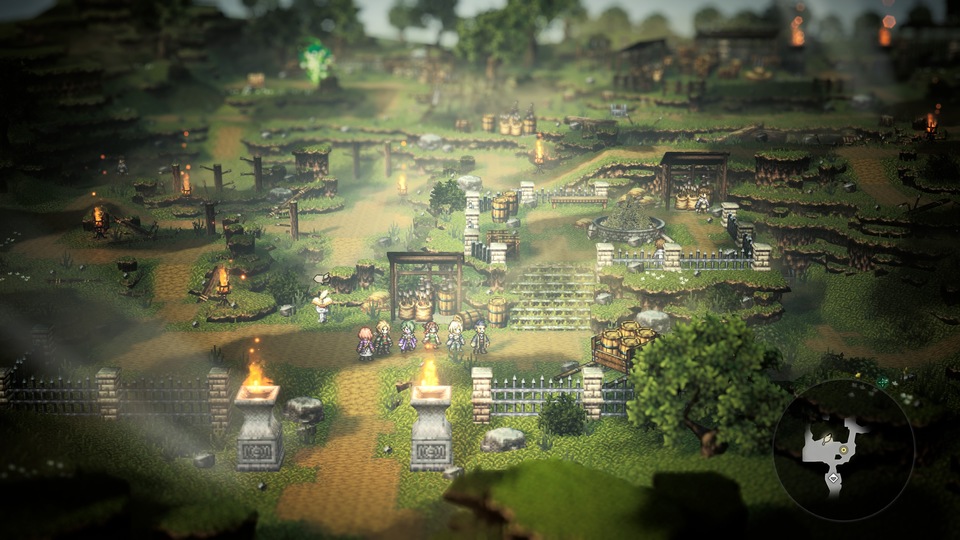
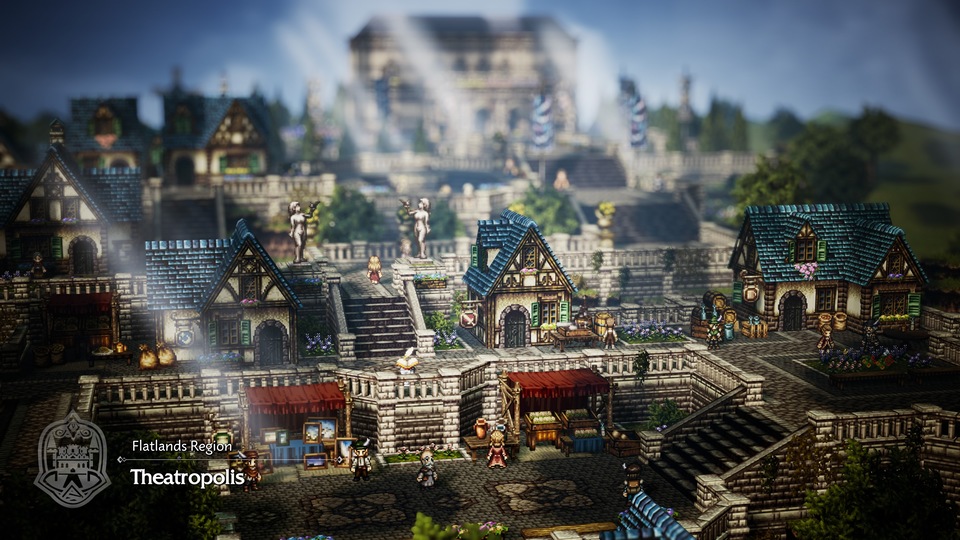
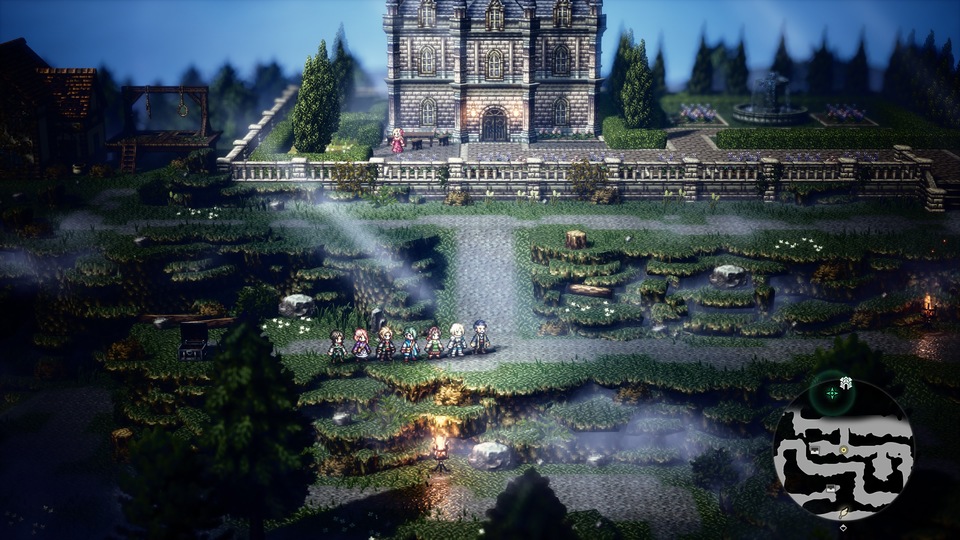
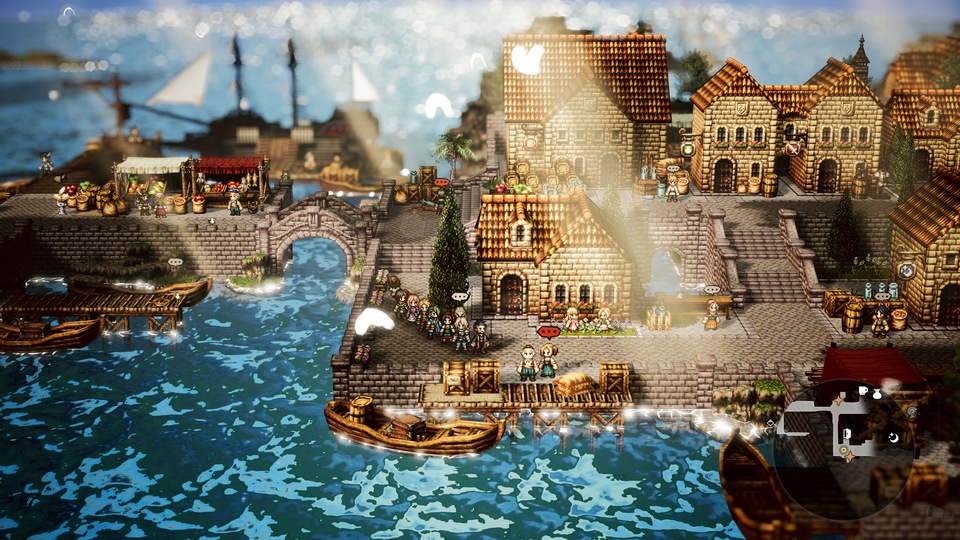
For players who haven’t tried Champions of the Continent, this is good news. Put down your gacha addiction and jump straight into the full experience here.
The title “Zero” is fitting, as everything here is a prequel. The timeline is set just a few years before the original Octopath Traveler, serving as the foundational starting point for the franchise’s lore.
Despite being tragic, the premise is simple.
Our hometown, Wishvale, is attacked by local tyrants. These tyrants nearly massacre the entire village, forcing the few survivors to scatter. Our main task is to rebuild Wishvale while recruiting new citizens and searching for survivors.
However, while the premise sounds simple, the execution is anything but.
These tyrants are known as Masters, and we face three distinct ones:
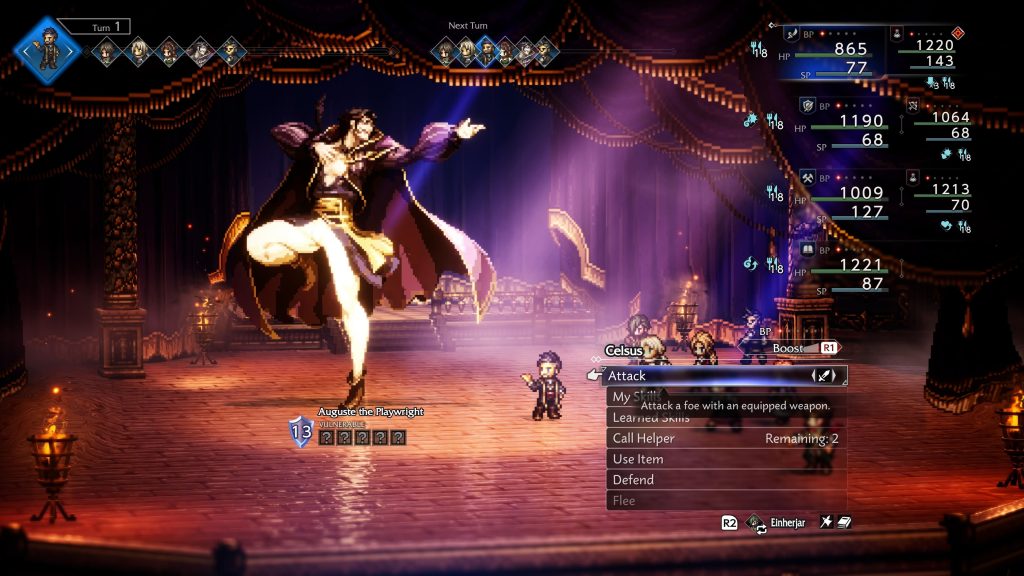
Auguste, The Master of Fame: A famous playwright whose theatrical works are adored across the continent of Orsterra. Audiences are instantly captivated by his plays. However, his masterpieces come at a cost. Auguste murders people to feel the “thrill” needed to imbue soul into his scripts. He is a pure psychopath.
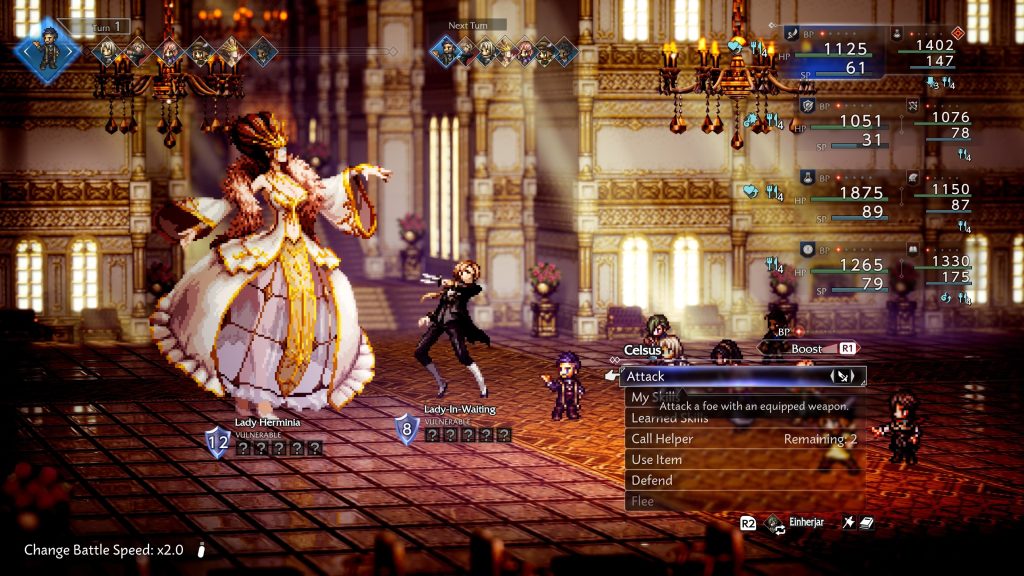
Herminia, The Master of Wealth: A cunning woman whose fortune could supposedly buy the entire continent. She justifies any means to smooth her path to power. She utilizes slave labor, abusing her workers to do her bidding and satisfy her desires—you know what I mean. She is deranged.
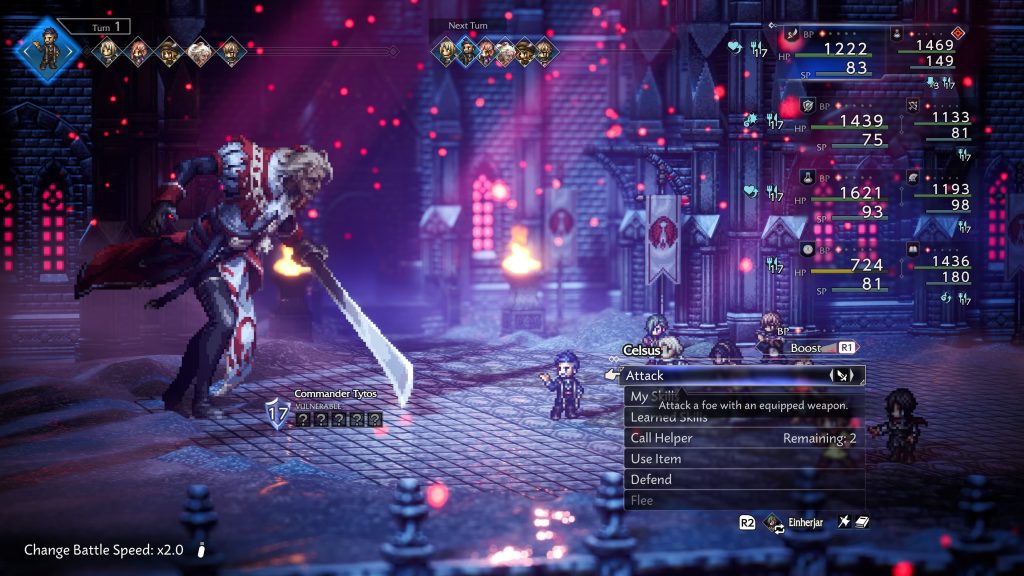
Tytos, The Master of Power: Formerly a loyal soldier of the church. The problem is, Tytos always felt capable of more. When the Pontiff asked him to rest from war to lead the city of Emberglow, he felt slighted. This planted the seeds of hatred against the church. Tytos wants to dismantle the church’s power and become the true ruler of Orsterra. To me, Tytos is the villain with the mildest psychological issues among the three.
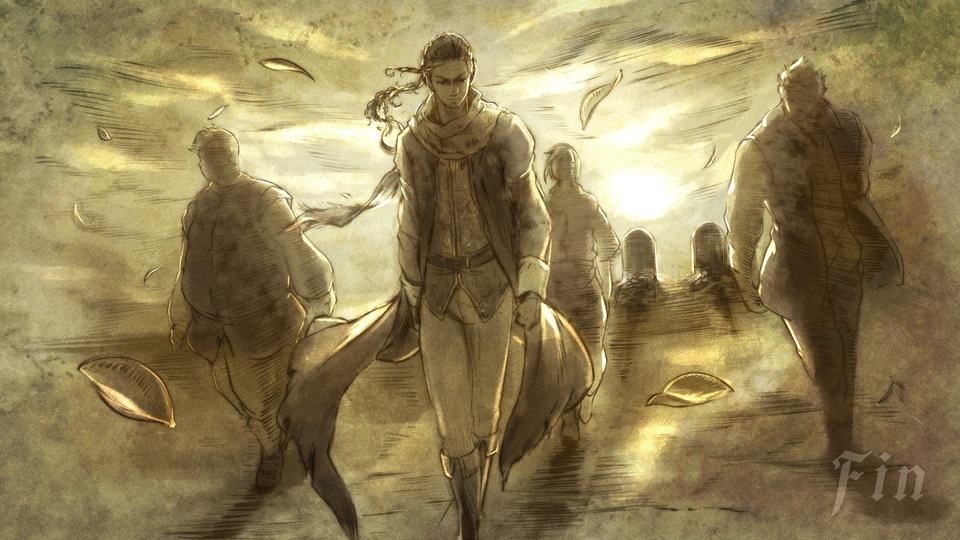
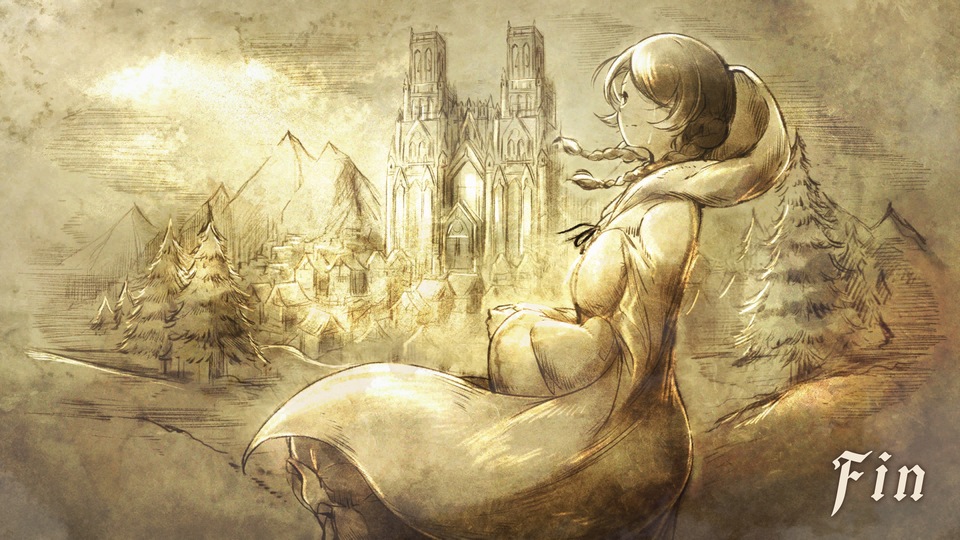
Why did these psychos destroy Wishvale? This brings us to the central conflict: The Divine Rings. They searched for a specific divine ring in Wishvale but failed to find it.
These Divine Rings are incredibly powerful and are protected by “Flameguards” to prevent them from falling into the wrong hands.
We begin the story by selecting a Path which serves as our main influence. This corresponds to the paths of the three Masters. However, the chosen path is not a branching storyline; even if I chose Wealth as my primary path, I could still confront the other Masters at my own pacing.
After defeating one of the Masters, I was immediately reminded of the premise of Unicorn Overlord. Both games share a similarity: The protagonist possesses a ring capable of snapping the continent’s inhabitants out of the villain’s genjutsu. The hero must travel the continent, building bureaucratic ties with local leaders to fight the main enemy.
In Octopath Traveler 0, we receive one Divine Ring capable of sealing the powers of the others—given to us for free simply because our character is the Chosen One. Naturally, every Ringbearer wants our ring. We aren’t just hunted by them, but also by other tyrants who feel entitled to its power.
To rebuild Wishvale, we must collect and seal all the Ringbearers. Unfortunately, this premise is delivered through a vessel of tragedy and heartbreak. As I mentioned earlier, plot twists are the lifeblood of this narrative.
Just when I felt the game was concluding, I was served a new chapter and further story expansion.
Combat and Job/Class
The first thing we’ll notice in combat is playing with 8 characters at once.
This introduces a Front and Back line system, adding mechanical depth to every battle. Characters in the front row are more likely to be targeted. You can switch characters between lines, but you are limited to acting with only 4 characters per turn (the active front line). Crucially, any character chosen to act immediately moves to the frontline.
The combat mechanics haven’t changed significantly from the predecessors, aside from the UI and pacing speed. We can still use Boost and Defend (similar to the Bravely Default series). However, I rarely used Defend in Octopath Traveler 0 because characters regenerate 1 AP in the following turn as long as they don’t use Boost or attack. We have a maximum of 5 AP. Using a Max Boost amplifies a skill up to Level 3, but it does not increase the hit count for skills with a fixed number of hits.
The battle cycle is simple: Break the Enemy’s Shield, then All-Out Attack with Boost.
Shield points are reduced by hitting weaknesses. Once broken, enemies eventually recover their shields (sometimes increasing the total count). This is where the Scholar job shines. The Scholar’s Analyze skill reveals HP and one weakness. If the main character is a Scholar, this triggers automatically at the start of a turn.
Unlike the previous two entries, the main character is practically locked to one main job. Switching jobs changes their entire skill set, except for equipped “detachable skills.” Over 40 hours, I unlocked almost every job, but the Apothecary remained my favorite. It is the only job capable of Reviving, along with single-target healing and AoE Regen. Despite being supportive, the Apothecary hits hard with Axe attacks.
Difficulty
To me, the Octopath series has never been about punishing difficulty. In JRPGs, i can usually over-leveling before facing strong enemies.
In Octopath Traveler 0, I practically never had to farm or grind levels. I simply fought every random encounter during traversal. The main story is long enough to keep our level naturally sufficient. Seriously, I only started touching under-leveled side missions after finishing several main story arcs.
The real issue lies in the pacing of the difficulty.
In some sections, the difficulty spike is sudden and drastic. I would go from breezing through areas without healing items to suddenly spamming heals against a mini-boss because my AoE healing regen couldn’t keep up with the damage output. My revive items were drained rapidly.
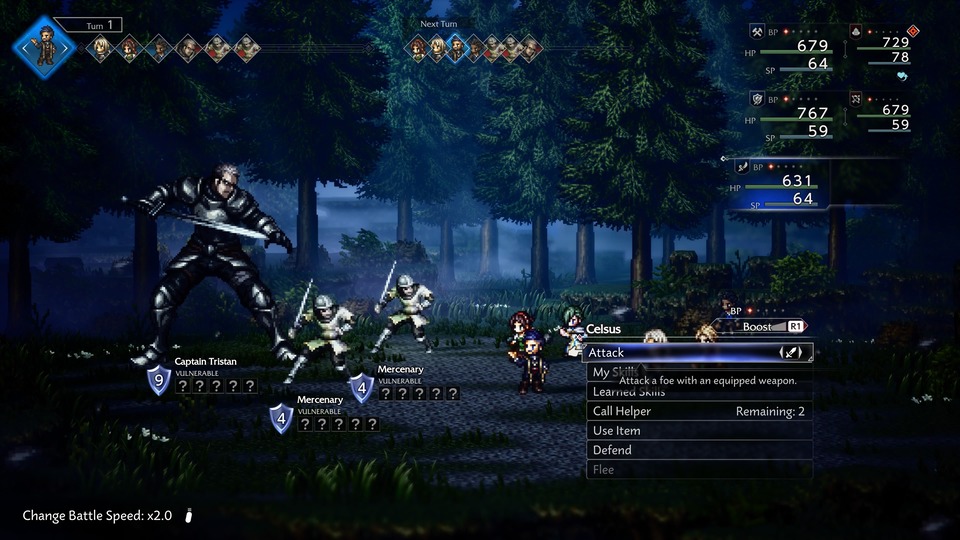
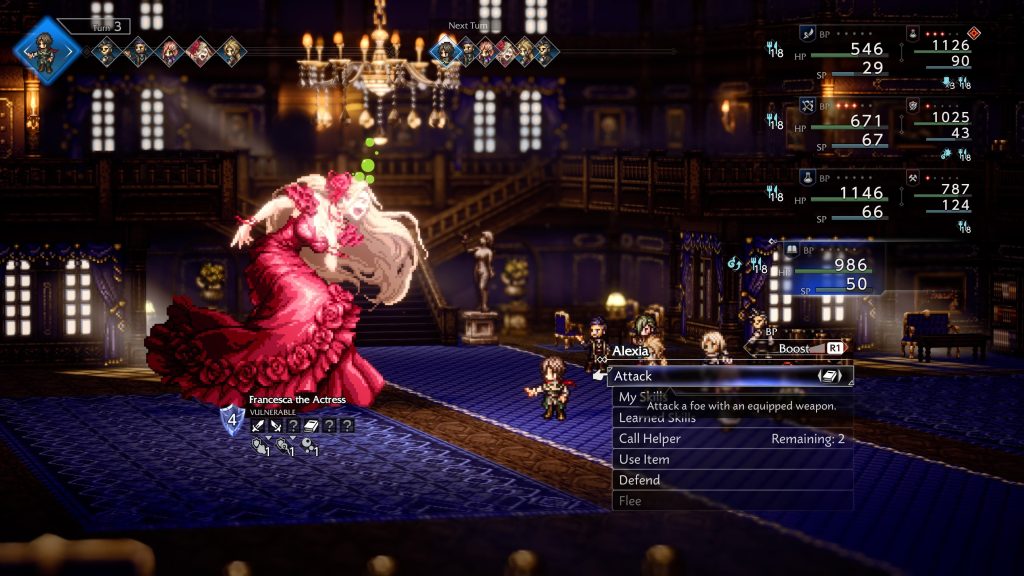
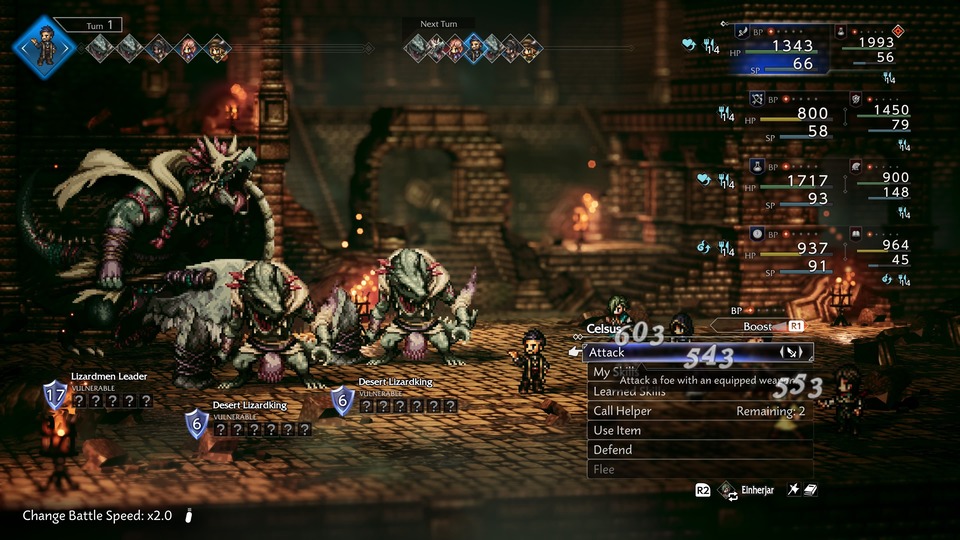
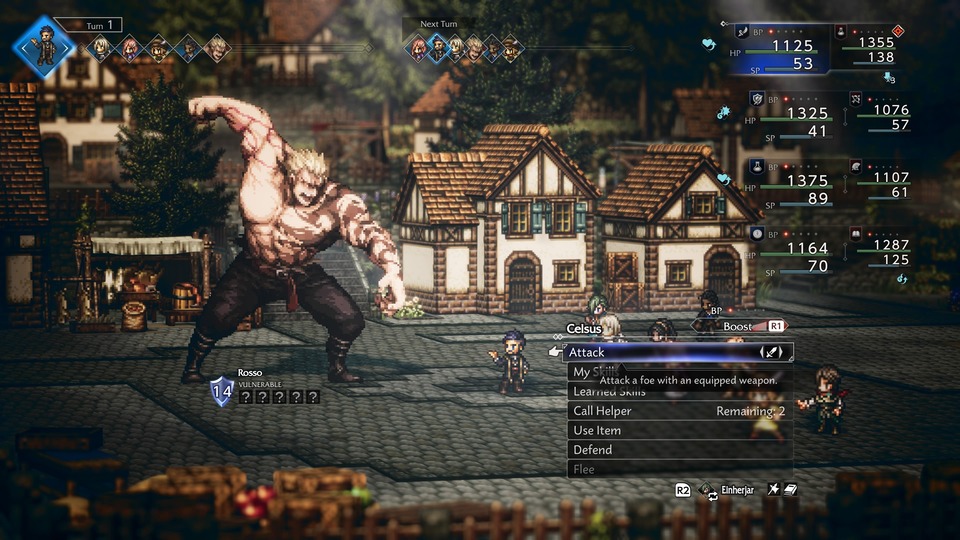
The solution wasn’t over-leveling or buying better gear (yea i had no money). I simply had to change tactics. If i hit a wall, then i need to start using Debuffs. Lower the enemy’s physical or elemental attack power with Weaken Foundation Mastery. It will save so many revive items. To speed up the fight, i use debuffs that increase the damage the enemy takes. Then i unleash the Boost to extend the debuff duration, a max-boosted debuff could lasts for 9 turns. For buffs, i use Stallwart Mastery to get physical def up, and blast two health AoE health regen from Dancer and Apothecary class.
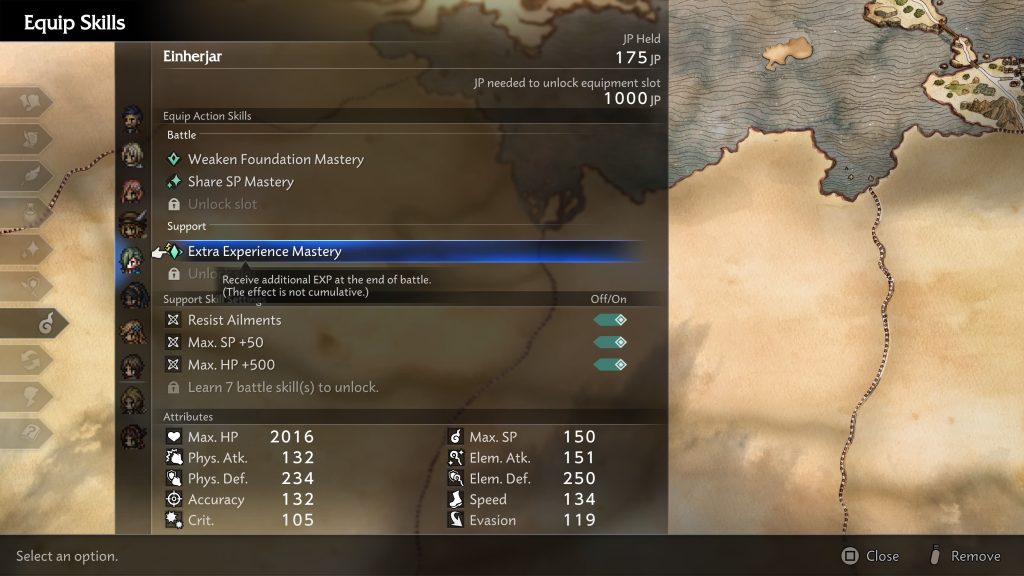
This tactic is essential for fighting not only bosses, but also elite enemies on the map (60k+ HP), which reward Radiant Cornerstones needed for upgrading buildings in Wishvale.
NPC Interaction
Since the goal is rebuilding Wishvale, we must interact with and recruit many NPCs. The interaction features include Inquiry, Contend, Entreat, Impress, Hire, and Invite.
- Inquiry: The first step to unlocking other features. Reveals blueprints, shop lists, recipes, and mission info.
- Entreat: Request items for free. Can also unlock cheaper shop prices or a “Haggle” option.
- Contend: Forcefully take items by fighting the NPC. Win, and we get everything they carry.
- Impress & Hire: Recruit the NPC as a “Helper” in battle. We can summon them twice per battle. Impress requires beating them; Hire requires paying them. There is a limit as contracts. When we reached the limit usage, the contract ends.
- Invite: Asks the NPC to live in Wishvale. Specific NPCs have specific uses and expertise (e.g., Alexia marginally boosts exp in the Training Area; a Breed Expert increases yield at the Ranch).
Not all NPCs are interactive, but bubble chats indicate who is.
However, keep in mind that these interactions are governed by specific success rates, which depend heavily on our current Influence level. This Influence is represented by three attributes: Power, Wealth, and Fame. These social stats will naturally increase as we advance through the main story, complete side missions, and make progress in ‘Rekindle the Flame’ (the rebuilding of Wishvale).
Every NPC we encounter has their own specific influence alignment and social standing. Consequently, it’s not surprising to come across NPCs with incredibly low success rates for any interactions—sometimes even dropping below 10%.
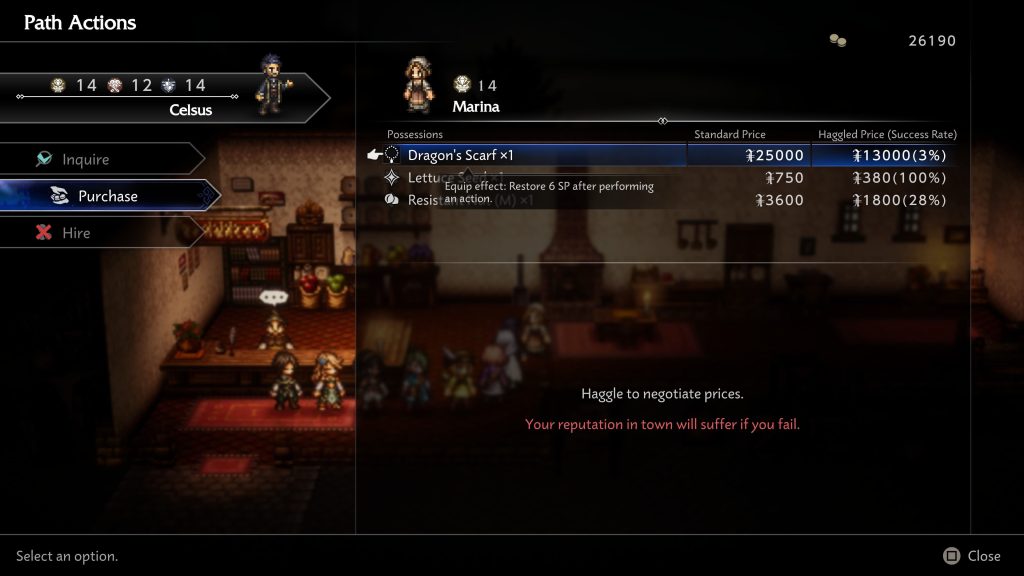
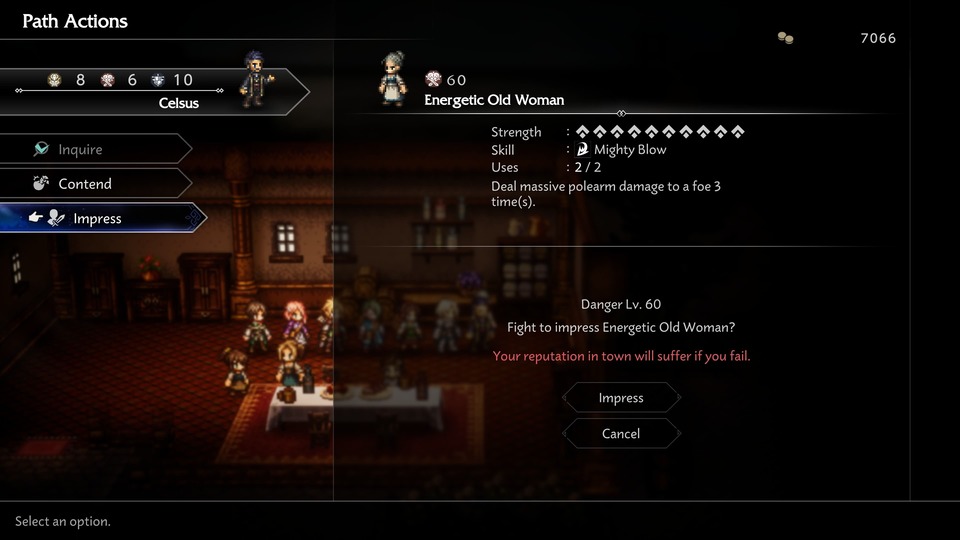
But, there is a another mechanic. If we fail an interaction 5 times, our relationship with the town “sours” (turns red), blocking interactions to anyone. We can reset this by paying the bartender at the town. But still, 5k leaves is too expensive at the beginning.
Town Building
I love farming and town-sim games, but I honestly didn’t expect much from Octopath Traveler 0‘s town building. Do not expect Story of Seasons, Stardew Valley, or even the casual Eastward: Octopia.
The mechanics are simple, no complex layouts or production chains. It just as simple as placing the building, changing its visual, upgrading the level so we can add more people to run the building, and gain more.
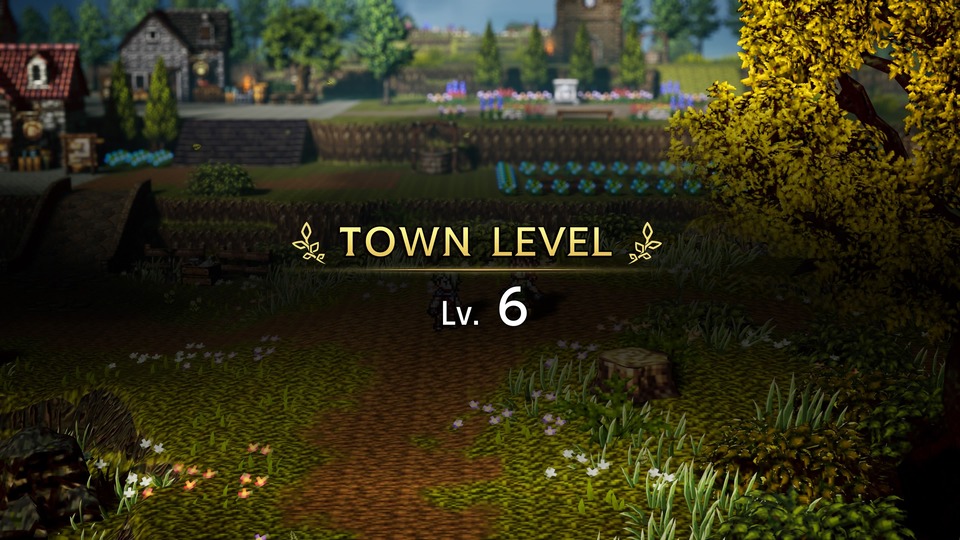
The unfortunate part is realizing that rebuilding is gatekept by story progress. We cannot rebuild Wishvale at our own pace. But, logically, this makes sense as we need to meet new people through the story to recruit them. But still, it limits our freedom.
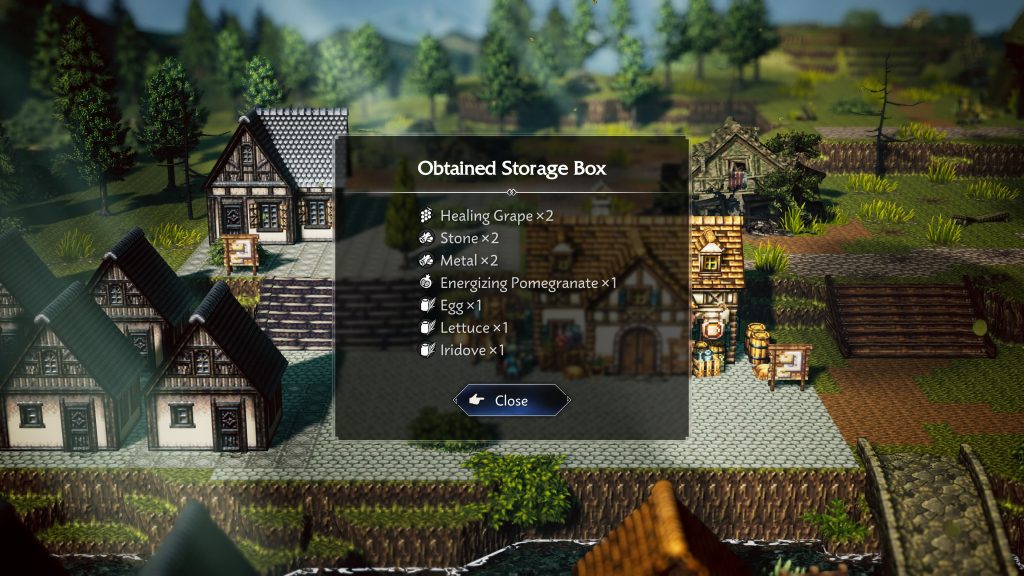
I recommend tackling the “Rekindle the Flame” missions in segments, at least until Level 5 or 6 (when the Training Arena opens). This feature is crucial for leveling up unused characters. Also, use the Storage Box to store harvest yields and money collected from residents.
Overall, the town building aspect is disappointingly basic. As the central objective of our journey, it doesn’t receive the attention it deserves. I know it’s only a side element within the broader Octopath framework, but it could have been implemented with far greater complexity.
Final Verdict
Although 40 hours still hasn’t brought me to the very end, I can vouch that playing Octopath Traveler 0 is a true rollercoaster experience. It goes up, down, and slaps me with plot twists repeatedly.
Just when I thought I was getting a happy ending, I was served severe psychological trauma. And just when I thought the game was over, I was invited to start an entirely new chapter. The game itself is a pure tragic novel that cost us more than 60 hours just to vouch the main story, and still, they have contents to offer and to prolong our playtime into 100 hours and more.
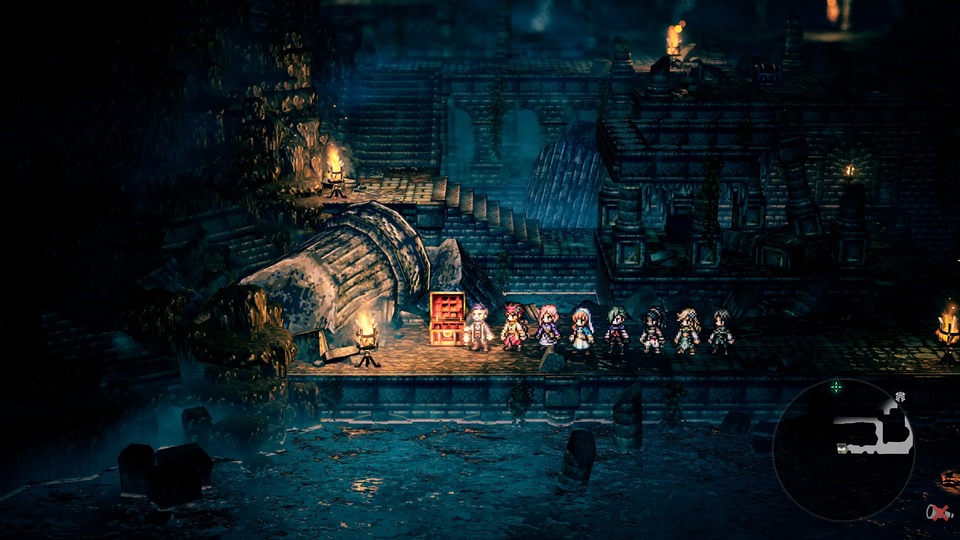
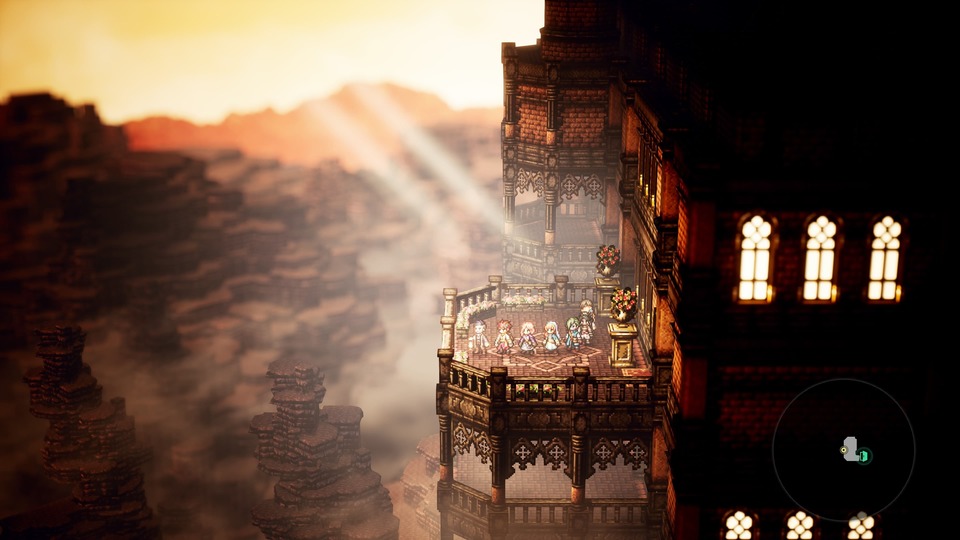
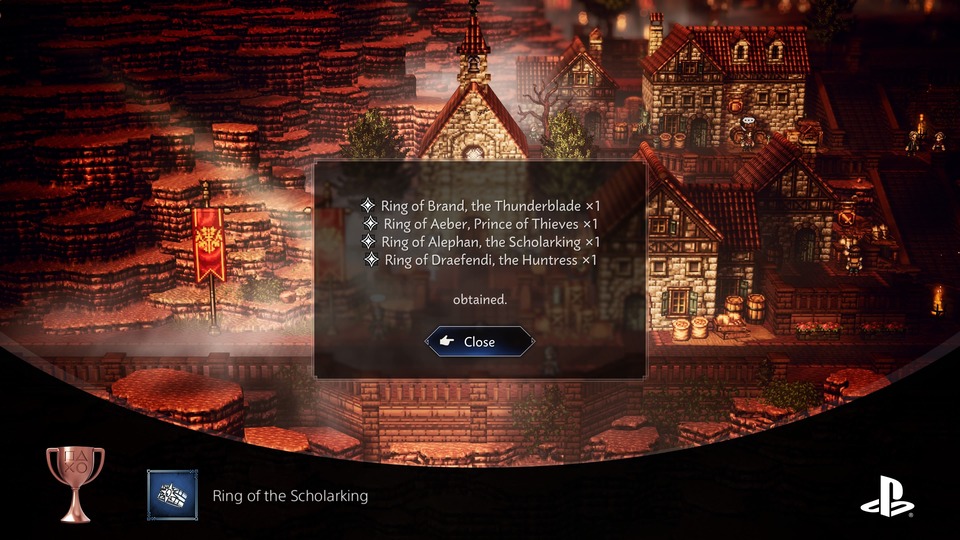
While the story is deep and depressing, the pacing is inconsistent. Some arcs feel rushed, while others are meticulous. Some feel overly drawn out. I am in the position to feel, if you can’t push through the first 20 hours, you likely won’t see the ending.
This pacing might make the game feel bloated to some, but it’s understandable given its origins as a compilation of the long-running mobile game.
For me, Auguste, The Master of Fame, is the most memorable villain. His arc had the best emotional pacing. His psychosis was epic: killing just to give himself a thrill for his art, not for world domination.
But once again, just when I thought Auguste was the peak of madness, the game showed me the true definition of insanity: The Master of All, The Psycopath of all time.
I recommend this game. Regardless of whether you dislike the single point-of-view narrative, this is a psychological thriller novel that you should play this year.
Pros:
- It still a great story telling: A long structure that binds the narrative into a unified whole, unlike the fragmented stories of previous games.
- Satisfying Payoff: The 3 Masters have their own psycopath journey and sorrowfull background. After slapped by thousand twist, then another psycopath Master came and finish the curtain.
- 8-Character Strategy: The front/back row system demands deeper rotation strategies and attrition management, adding more depth, and more variation. Some characters have advantages on being front or back.
- End-Game Design: Side quests and dungeons become increasingly elaborate as you progress.
- Audio design: Love it to the max. The background song of Valore City is the soothening one!
Cons:
- Slow Burn: The game truly shines only after the 20-hour mark. If you couldn’t hold this far, you likely won’t see the very end.
- Poor First Impression: Early story hours lack engagement, and gameplay feels restrictive.
- Simple Level Design: Dungeons and exploration (especially early on) are far simpler than the main series standard.
- Simplified Features: Path Actions are simplified to the point of feeling almost trivial.
- The Town Building is Disappointingly Basic. As the central objective of our journey, it doesn’t receive the attention it deserves. I recognize it’s only a side element within the broader Octopath framework, but it could have been implemented with far greater complexity.
- Feature Gating: Many Quality-of-Life features are locked behind town-building progress.